 DailyGoal
StrengthWeight + reps
Low-to-High Cable Fly
Cable fly variation emphasizing upper chest.
Cable machine
Equipment
Cable machine
Also known as
Low Cable Chest FlyLow Cable Fly
Targeting
Upper chest
Primary
Chest
Secondary
Front delts
Secondary
How to do it
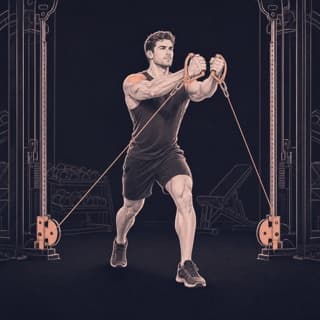
Set both pulleys to the lowest position and attach a single handle to each. Take a handle in each hand and step forward so the cables have tension, with one foot slightly ahead of the other.
- 1.Start with your arms down and slightly out to the sides, palms facing forward and elbows slightly bent.
- 2.Keep your chest up and your torso still.
- 3.Sweep the handles up and in along an arc until your hands meet in front of you at about upper-chest height.
- 4.Squeeze for a moment at the top without letting your shoulders roll forward.
- 5.Lower the handles along the same arc under control until you feel a stretch across the front of your chest.
Common mistakes
- Bending the elbows more as the set gets hard, which turns the fly into a press.
- Raising the hands above head height, which moves the work onto the front of the shoulders.
- Leaning forward and using your body weight to move the handles.
- Choosing a weight too heavy to control on the way down.
Variations
- Single-arm low-to-high fly
- Stand side-on to one pulley and work one arm at a time. It is easier to keep the torso still and see each side's range.
- Kneeling low-to-high fly
- Kneel between the two stacks. This takes the legs out of the movement and makes it harder to lean into the reps.
Alternatives
- Cable Crossover: The same fly with the pulleys set high, which works more of the middle and lower chest.
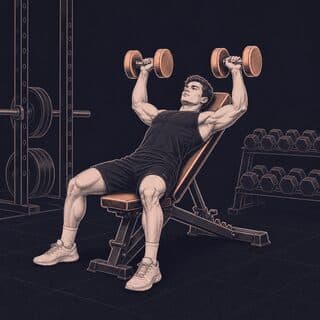
- Incline Dumbbell Fly: An upper-chest fly with dumbbells on an incline bench.
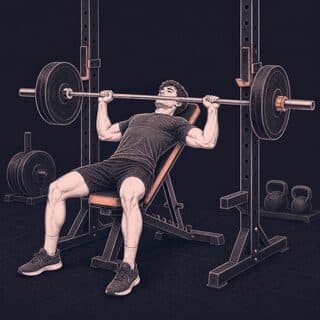
- Incline Machine Press: A pressing option for the upper chest that allows heavier loads.
- Pec Deck: A machine fly with a fixed path, useful when no cable station is free.
Log Low-to-High Cable Fly in a workout with DailyGoal Pro workout tracking.